SKU:
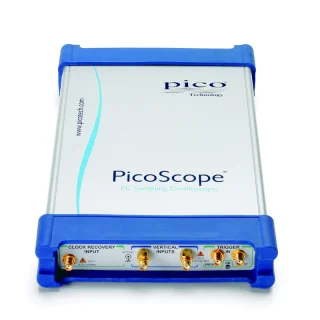
PQ211
  • 5GHz bandwidth, 70ps transition time
  • 1TS/s (1 ps) equivalent-time sampling
  • Two 12-bit 500MS/s ADCs
  • Pulse, eye and mask testing to 70ps and 3Gb/s
  • Up to 2 million triggered captures per second
  • Logical, configurable and touch-compatible Windows user interface
  • Comprehensive built-in measurements, zooms, data masks and histograms
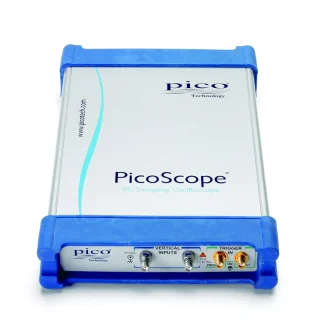
13.119,75 € *
  • Available
  • : 11 - 13 Workdays  (DE - int. shipments may differ)
SKU:
PQ212
  • 16GHz bandwidth, 70ps transition time
  • 5TS/s (0.2ps) equivalent-time sampling
  • Optional 8Gb/s clock recovery
  • Two 12-bit 500MS/s ADCs
  • Pulse, eye and mask testing to 45ps and 11Gb/s
  • Logical, configurable and touch-compatible Windows user interface
  • Comprehensive built-in measurements, zooms, data masks and histograms
22.377,95 € *
  • Available
  • : 11 - 13 Workdays  (DE - int. shipments may differ)
SKU:
PQ209
  • 5GHz bandwidth, 70ps transition time
  • 1TS/s (1 ps) equivalent-time sampling
  • factory-fit 5Gb/s clock and data recovery
  • Four 12-bit 500MS/s ADCs
  • Pulse, eye and mask testing to 70ps and 3Gb/s
  • Up to 2 million triggered captures per second
  • Logical, configurable and touch-compatible Windows user interface
  • Comprehensive built-in measurements, zooms, data masks and histograms
SKU:
PQ181
  • 5GHz bandwidth, 70ps transition time
  • 1TS/s (1 ps) equivalent-time sampling
  • Four 12-bit 500MS/s ADCs
  • Pulse, eye and mask testing to 70ps and 3Gb/s
  • Up to 2 million triggered captures per second
  • Logical, configurable and touch-compatible Windows user interface
  • Comprehensive built-in measurements, zooms, data masks and histograms
17.463,25 € *
  • Available
  • : 11 - 13 Workdays  (DE - int. shipments may differ)
SKU:
PQ210
  • 16GHz bandwidth, 70ps transition time
  • 5TS/s (0.2ps) equivalent-time sampling
  • factory-fit 8Gb/s clock and data recovery
  • Four 12-bit 500MS/s ADCs
  • Pulse, eye and mask testing to 45ps and 11Gb/s
  • Logical, configurable and touch-compatible Windows user interface
  • Comprehensive built-in measurements, zooms, data masks and histograms
SKU:
PQ182
  • 16GHz bandwidth, 70ps transition time
  • 5TS/s (0.2ps) equivalent-time sampling
  • optional 8Gb/s clock recovery
  • Four 12-bit 500MS/s ADCs
  • Pulse, eye and mask testing to 45ps and 11Gb/s
  • Logical, configurable and touch-compatible Windows user interface
  • Comprehensive built-in measurements, zooms, data masks and histograms
29.684,55 € *
  • Available
  • : 11 - 13 Workdays  (DE - int. shipments may differ)
You need help?
Please send a message to priggen@priggen.com

FAQ about Oscilloscopes

What is an oscilloscope and what is it used for?

An oscilloscope is an electronic measuring instrument that displays electrical voltages as time-dependent curves on a screen. It is one of the most important tools in electronics and electrical engineering for visualizing and analyzing electrical signals.

The oscilloscope is used, for example, for:

  • troubleshooting circuits,

  • testing signal waveforms (e.g., square, sine, sawtooth),

  • analyzing pulses, oscillations, or interference,

  • measuring frequency, amplitude, rise time, or pulse width,

  • and developing and commissioning electronic devices.

It helps you determine whether a signal has the desired shape, whether there are any interferences, or whether, for example, a clock frequency is applied correctly.

What types of oscilloscopes are there?

The most important types of oscilloscopes are:

1. Analog oscilloscopes

  • Use a cathode-ray tube (CRT) to directly display the signal.

  • Rarely used today because they do not allow digital storage and have limited functionality.

2. Digital storage oscilloscopes (DSO)

  • Convert analog signals into digital data using an analog-to-digital converter (ADC).

  • The digital data can be stored, analyzed, zoomed, and exported.

  • A standard in laboratories, schools, and industry.

3. Mixed-signal oscilloscopes (MSO)

  • Combine analog and digital channels to simultaneously measure microcontroller or FPGA signals with digital states and analog voltages.

4. Handheld oscilloscopes

  • Compact and battery-operated – ideal for mobile use on-site, e.g., in maintenance or field work.

5. PC Oscilloscopes

  • Consist of a measurement module connected to a computer via USB or LAN.

  • The PC handles display, control, and data analysis.

What do bandwidth, sampling rate and memory depth mean for oscilloscopes?

Bandwidth:

The bandwidth indicates the frequency up to which the oscilloscope can still accurately capture signals. An oscilloscope with a bandwidth of 100 MHz can reliably display signals up to approximately 100 MHz – beyond this, signals appear distorted or attenuated. For accurate measurement results, the bandwidth should be 3 to 5 times higher than the maximum frequency in the signal.

Sampling Rate:

This indicates how often per second the oscilloscope measures the input signal – e.g., 1GSa/s = 1 billion samples per second. A sampling rate that is too low leads to "aliasing," i.e., the signal is displayed incorrectly. Rule of thumb: The sampling rate should be at least 5 to 10 times higher than the highest signal frequency.

Memory Depth:

This determines how many measurement points the oscilloscope can store internally. A high memory depth is particularly important for slow signals or long signal curves in order to be able to display all details even at high sampling rates.

How many channels should an oscilloscope have?

The required number of channels depends on the application:

2-channel oscilloscopes are standard for many general applications – e.g., comparing two signals or measuring differences.

4-channel oscilloscopes are ideal if you want to examine more complex signals or, for example, observe multiple clock signals, bus lines, or combined signal waveforms simultaneously.

MSOs also offer 8 or 16 digital channels, for example, to simultaneously record digital states (high/low) with analog signals.

What is a trigger and what is it used for?

A trigger is a type of trigger that tells the oscilloscope when to start displaying.

For example, if you have a periodic signal, such as a square wave, the signal image will constantly "jump" on the screen without a trigger. With the trigger, you can specify a specific signal condition—for example, a rise at 2V—and the oscilloscope will then start at that exact point on each sweep.

The result is a steady, easy-to-read image of the signal. You can also trigger on specific signal ratios, pulse widths, or even serial protocols (UART, I2C, SPI), provided the oscilloscope supports it.

Can I also measure current with an oscilloscope?

An oscilloscope primarily measures voltage. To measure current, you need a current transformer or a current clamp meter, which converts the current proportionally into a measurable voltage. These tools are connected to the oscilloscope and then provide a correspondingly scaled voltage that you can evaluate.

Our Brands

Oscilloscopes for electronics, automotive and service

Oscilloscopes are key instruments in electronics, electrical engineering and automation. They display electrical signals versus time and are indispensable for troubleshooting, commissioning, development and education. This category includes digital storage oscilloscopes, PC / USB oscilloscopes and compact handheld instruments.

Measurement principle and key specifications

A digital storage oscilloscope samples the input signal at high frequency and stores the samples in memory. Important parameters are bandwidth, maximum sampling rate, memory depth, vertical resolution and number of channels. Sufficient bandwidth is required to capture fast edges and high-frequency content without distortion.

Benchtop, handheld and USB oscilloscopes

Benchtop oscilloscopes provide large displays, convenient operation and advanced trigger functions – ideal for labs and test benches. Handheld oscilloscopes are battery powered and rugged for field applications. USB oscilloscopes connect to a PC and use its screen and processing power, which makes them flexible for mobile use and education.

Application areas

In R&D, oscilloscopes are used to analyze analogue and digital signals, clocks and bus interfaces. In drive technology they help to evaluate PWM signals and current waveforms. Automotive oscilloscopes support the analysis of sensor, actuator and bus signals. In education, easy-to-use instruments help to explain the fundamentals of electrical engineering.

Selection criteria

Key criteria include bandwidth, channel count, memory depth and trigger features. Options such as serial bus decoding, integrated generators, firmware upgrades and PC interfaces should also be considered. Matching probes are just as important as the oscilloscope for accurate results.

Benefits of professional oscilloscopes

Professional oscilloscopes offer high measurement accuracy, robust hardware and long-term availability of accessories. Combined with suitable passive, differential and current probes they form a powerful tool set for design, service and training.