Analytical Instruments for pH, Conductivity, Pure Water & Oil Quality – Meters for Laboratory & Process


Price range
€
€
Special items
Sale 15%


- SKU:
- 1340-2702
- Shipping weight:
- 0,50 kg
- Item weight:
- 0,20 kg
- enables setting of ideal frying point
- exact determination of frying oil quality
- 0 ... 40% polar compounds
- temperature range up to 200 °C (428 °F)
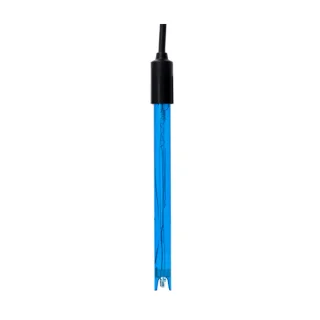

- SKU:
- GE135-WD
- measuring range: 0 bis 14pH, 0 bis +80°C
- integrierter Temperatursensor
- Elektrolyt: Gel- Elektrolyt
- 2m Kabel with wasserdichtem BNC- connector
- Temperatursensor- Anschlüsse: 4mm- Bananenstecker
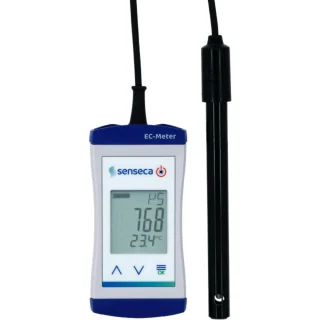

- SKU:
- ECO521-L01
- Measuring range: 0 to 5000µS/cm
- Precise and durable wide-range measuring cell
- Waterproof
- Made in Germany


- SKU:
- 823-501
- Ideal for pH measurement of liquids and semi-solids
- For food processing, agricultural and laboratory applications
- Ø12 x 120mm
- Temperature operating range 0 to 100 °C


- SKU:
- 170-100
- pH Thermistor penetration probe for 8100 Plus pH & temperature meter - 170-100
- Replacement probe for 8100 pH kit
- Probe dimensions 3.3 x 100mm
- Response time less than 4 seconds

- SKU:
- 830-080
- Protective zip pouch for pH Meter as supplied with 8100 pH Meter Kit
- Soft PVC fabric
- Protects your 8100 pH Meter and probes

- SKU:
- PH40-2-2-00
- Measuring range: -1 to +15 pH
- Head transmitter for measuring chains with S7/S8 connector
- Output: 4-20mA = -1 to +15 pH
- Zero point: pH 7,0
- Slope: 59.2 mV/pH, uncompensated

- SKU:
- 816-071
- Bottle of 90ml
- Allows simple re-calibration of either your ETI conductivity meter or your HortiCare nutrient tester
- 2.76mS (28cF or 1932ppm) @ +25°C


- SKU:
- 225-528
- measuring range: 0.00 to 5.0mS/cm
- resolution. 0.01mS/cm
- measures ppm, mS/cm & temperature
- automatic temperature compensation
- easy-to-use 1-point recalibration function
- compact & robust design
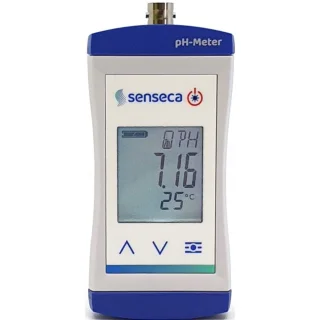

- SKU:
- ECO510-114
- Modern and functional housing
- 3-line display
- Overhead display at the push of a button
- Backlighting
- Waterproof (IP65 / IP67)
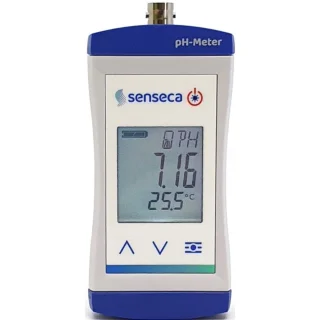

- SKU:
- ECO511-114
- pH meter with possibility of redox measurements
- Overhead display at the push of a button
- Waterproof (IP65 / IP67)
- BNC connection for interchangeable electrodes
- Supplied with pH electrode GE 114 WD


- SKU:
- 813-525ff
- Variations in:
-
- Modell
- Truly pocket-sized!
- Easy to read 6mm LCD display
- Indicates ppm (parts per million) or µS (micro-siemens) units
- Accuracy of ±2% of full scale
Best sellers


- SKU:
- 800-890
- for fast response testing of frying oil quality
- inexpensive
- no sample preparation or special training required
- sample dip-and read method
- easy to read colour chart for decision making


- SKU:
- G7500-PH/CON/O2


- SKU:
- G7500-PH/CON
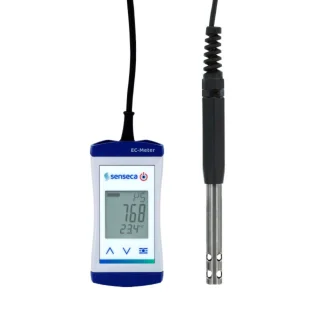

- SKU:
- ECO523-L01
- Modern and functional housing
- Outstanding price / performance ratio>
- 3-line display / overhead display at the push of a button
- Backlighting
- Waterproof (IP67)
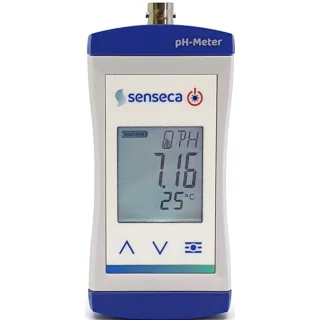

- SKU:
- ECO510-SET
- pH meter with electrode and work/calibration set in case
- Measuring range: 0.00 to 14.00pH
- 3-line display / overhead display at the push of a button
- Backlighting
- Waterproof (IP65/67)
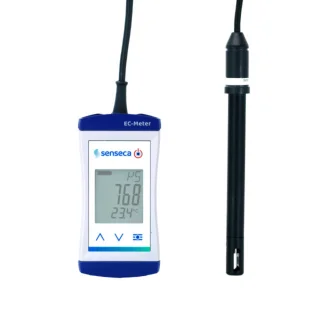

- SKU:
- ECO522-L01
- Modern and functional housing
- Outstanding price / performance ratio
- 3-line display / overhead display at the push of a button
- Backlighting
- Waterproof (IP65/67)


- SKU:
- GMH5430

- SKU:
- LF200RW
Our Brands: